The System that Keeps You Upright

The Vestibular System.
Tucked deep inside the inner ear, quietly doing its job, this powerhouse system is responsible for your sense of balance, orientation, and spatial awareness.
It's full-time job is to report back to your brain whether you're upright, upside down, spinning, accelerating... or about to face plant.And lately, it's been at the front of my mind.As many of you know, my kiddo recently had surgery to remove a tumour in this exact area. Which means I get a front-row seat (anatomically and emotionally) to how vital and wildly
underappreciated this system is.
When I teach best, it's because I have lived it...
And this has hit me both in the heart and my nerdy brain.
So, let's get nerdy...
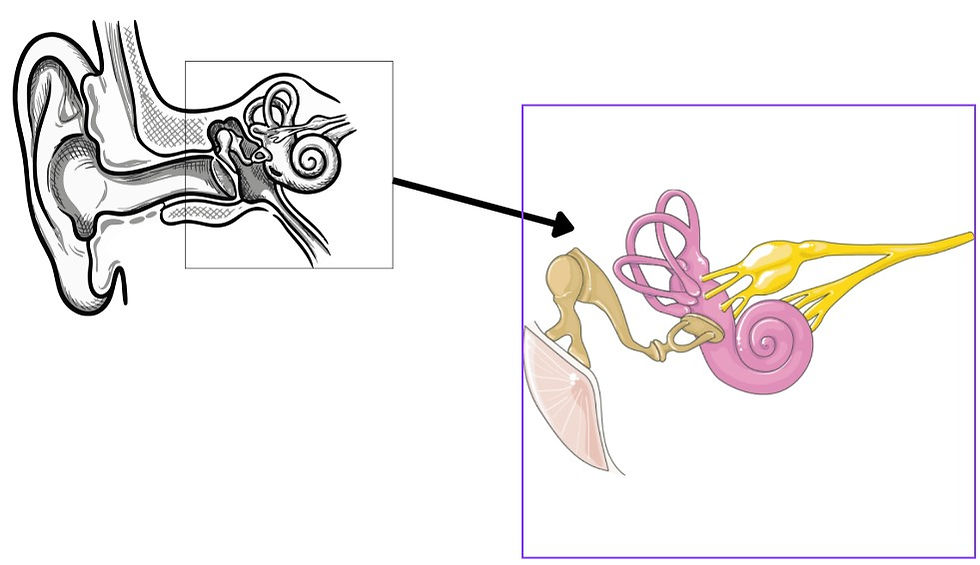
Inside the inner ear live 2 key players:
the semicircular canals - three fluid-filled loops that detect rotation or nodding
the otolith organs - which sense linear movement and gravity (think: which way is down)
Together, they constantly talk with your eyes, proprioceptive system (body awareness), and your nervous system to keep you upright, coordinated, and safe.
What does this mean for movement?
Simply, this system is the reason you can stabilize your head while you walk, balance on one foot, raise from the floor to standing, stay oriented when you pivot, and all-in-all feel confident in movements.
When the vestibular system is healthy, the body feels grounded, responsive, and resilient.
When it's under-stimulated, overwhelmed, or poorly integrated... things feel off.
This can show up as:
dizzy
clumsy
feeling unsettled in movement
a nervous system on high alert
But you don't need a pathology, like my child's, for this system to be dysregulated. Modern life does a great job of keeping our heads level, eyes fixed, and movements predictable. Pretty much the opposite of what nourishes the vestibular system.
This is why thoughtful, intentional movement matters.
Not just stretching.
But movement that asks your body to orient, adapt, sense, and respond.
Anatomy isn't abstract. It's happening inside real bodies and telling us real stories.
This system (and my child's healing experience) has reminded me how much information our bodies carry... long before we have the words to describe it.
Here's your unofficial experiment:
Pay attention to movements this week. Are there times you hesitate with movement?
That pause.... often vestibular.
Stay curious ✨


Comments